

Airbnb Check-in in Dubai: An Owner’s Arrival Checklist
A Dubai Airbnb check-in checklist for owners: building access, guest instructions, keys, late arrivals, readiness checks and backup support.
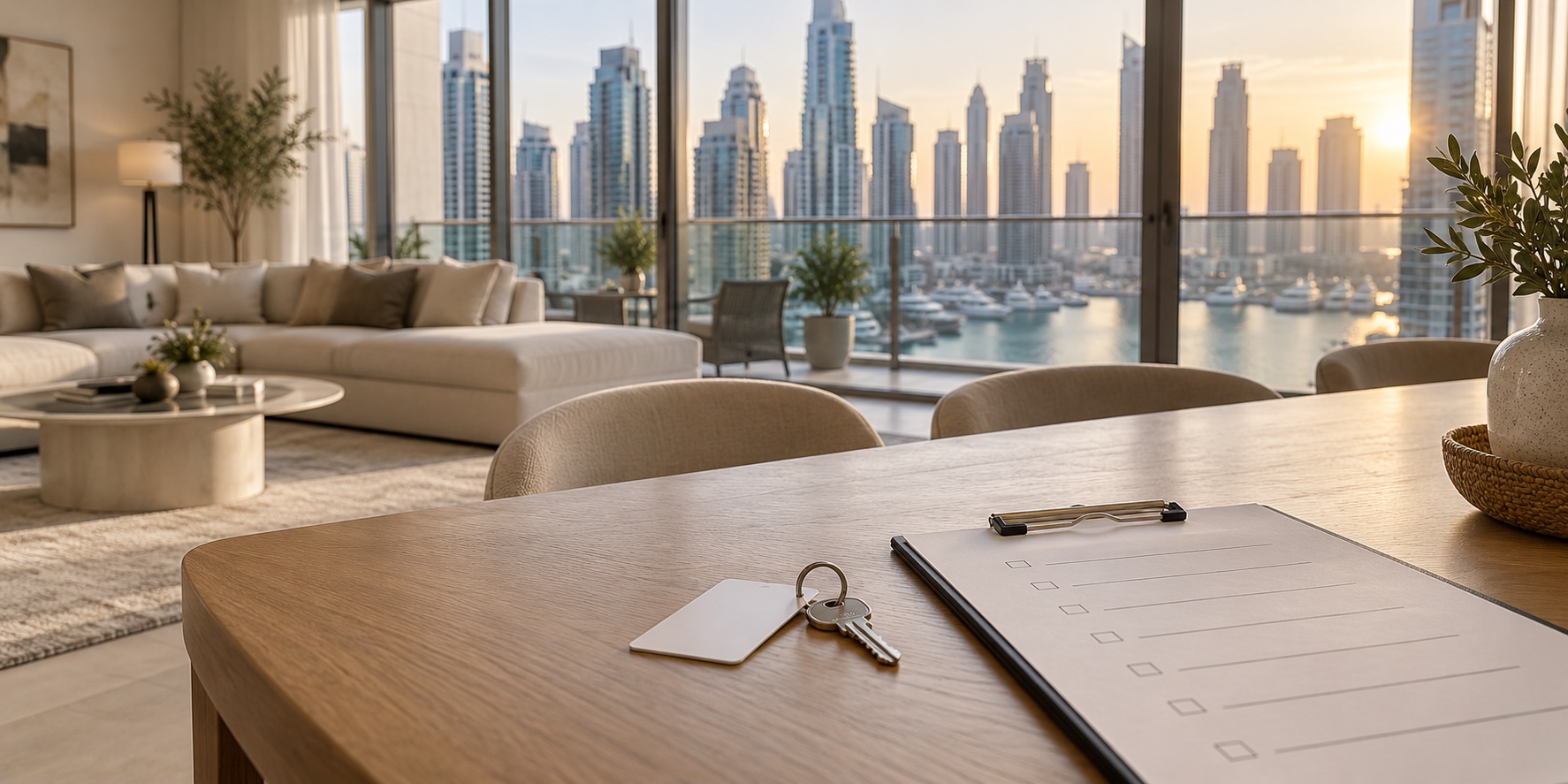
A guest can reach the right tower and still struggle to reach the apartment. The entrance may be on another road, a lift may need an access card, or the arrival instructions may describe a lock that has changed. For owners using Airbnb management in Dubai, a clear check-in process connects the booking, building access and property handover.
This guide helps you review that process with a manager. It focuses on the arrival itself, complementing our turnover checklist and guide to how Airbnb management works.
1. Map the complete route to the apartment
Ask your manager to walk the route as a first-time visitor: from the taxi drop-off or parking entrance, through reception, into the lift and up to the front door. Record each point where a guest needs directions, permission, a key or a card. A working apartment lock does not solve an inaccessible building entrance.
Confirm the current arrival procedure with the actual building team. Establish who arranges any required visitor access and what reception can and cannot do. Do not assume that security staff will store keys, answer booking questions or admit a guest without the agreed information.
Where parking is included, check the bay number, vehicle entrance, access device and route back to the apartment. Describe any practical limitations accurately. Use photographs of entrances or landmarks where words alone could send a driver to the wrong side of the building.
2. Choose an access method the team can support
Airbnb lists several check-in methods, including smart locks, keypads, lockboxes, building staff and in-person greetings. Its guidance also notes that self check-in may not be available in every country. A platform option is not permission to install equipment or bypass local or building requirements.
Agree a method suitable for the property and confirm any necessary approvals before making changes. For an in-person greeting, identify the host, coverage hours and cover for absence. For a lock or lockbox, define who tests it, maintains it and responds when it fails.
Check all required access devices together. A guest may need an apartment key, lift card and parking remote. Keep an inventory with replacement arrangements and an agreed process for lost items. Share credentials only through the approved reservation workflow and manage them between stays where the system allows.
3. Write instructions that work on a phone
Keep the arrival guide in a short sequence: destination, correct entrance, reception step, floor and apartment, then door access. Separate essential entry instructions from restaurant suggestions and the full house manual. A tired guest with luggage should be able to find the next step quickly.
Airbnb recommends previewing the arrival guide, using visual instructions where helpful and asking someone to test the steps. Have a person unfamiliar with the unit try your guide. Revise it when the entrance, access device or building procedure changes.
Include the check-in time and a clear support route. Airbnb’s current instructions explain that detailed check-in information becomes visible to guests 48 hours before arrival. Check what the guest can actually see in the reservation rather than assuming a saved message has reached them. For other channels, verify their own delivery arrangements.
4. Connect arrival time to property readiness
Record the expected arrival window and update it when the guest reports a delay. Distinguish flight landing time from arrival at the apartment. If a representative is meeting the guest, agree how the meeting time is confirmed and how long the representative waits before escalating.
Early check-in should depend on confirmed readiness and access coverage. Give the person approving it visibility of cleaning, inspection and outstanding repairs. An automated welcome message should not promise entry while the operations team is still preparing the property.
For a late arrival, test the whole route during the relevant access hours. Ask what happens if reception procedures change overnight or the guest cannot use the expected entrance. State any arrival restrictions or agreed charges clearly through the appropriate booking and management arrangements.

5. Make failed access a defined support task
Agree who answers an arrival problem, who can physically attend and who provides backup if the first contact is unavailable. A contact number is useful only when someone monitors it. Ask the manager to explain the escalation path using a realistic scenario, such as a guest arriving after midnight with a non-working lift card.
The responder should first identify where access failed: locating the building, reception, parking, lift or apartment door. That distinction helps the team send the right person or instructions. Avoid repeatedly resending a door code when the guest cannot get past reception.
For powered access devices, document battery checks and a suitable backup entry arrangement. Keep spare access under controlled custody, with a record of who holds it. Agree who can authorise a call-out or replacement device and how the expense appears on your owner statement.
6. Confirm arrival without overwhelming the guest
Send a brief welcome message that makes support easy to find. Check whether the guest has entered successfully and ask them to report any immediate issue. Do not require a long series of acknowledgements when one clear response will do.
Provide simple instructions for Wi-Fi, cooling controls and essential appliances once the guest is inside. Keep those details consistent with the actual equipment. A house manual should help a guest settle in without having to search through an entire message thread.
Keep access support distinct from any required guest registration or holiday-home compliance work. Ask the operator who completes those responsibilities and when. Our Dubai holiday-home operating guide provides a starting point for that separate discussion; a successful door handover alone does not demonstrate compliance.
An arrival checklist for owners
- Building arrival process confirmed and responsibilities assigned
- Drop-off, entrance and any included parking directions checked
- Every required key, card, remote or lock tested
- Arrival guide previewed and tested by someone unfamiliar with the unit
- Check-in time and expected arrival window recorded
- Cleaning and inspection sign-off connected to early-entry approval
- Late-arrival coverage and physical backup agreed
- Guest support contact and escalation route confirmed
- Access failures recorded and instructions corrected when needed
What to ask your Airbnb manager in Dubai
Request a redacted example arrival guide and a walkthrough of the access process for your own building. Ask who owns each task, whether out-of-hours attendance is included and which access-related costs need your approval. Review those details alongside the written scope and our management-fee guide.
Ask for a short record of access incidents and the changes made afterwards. Repeated questions about the same entrance may point to unclear directions. Repeated card failures may need a replacement or a change in testing. Use the pattern to improve the process rather than treating every arrival as a new problem.
Reliable arrivals are one practical part of Airbnb management in Dubai. Contact StayinDubai with your building, unit type and current access arrangements to discuss a suitable management scope.
Reviewed 15 October 2026. Adapt this operating checklist to the property, building requirements and agreed service. Image: reused AI-generated illustration of apartment keys and a checklist overlooking Dubai Marina, not a photograph of a specific managed unit.


