

Guest Damage in a Dubai Airbnb: An Owner’s Evidence Checklist
A Dubai Airbnb guest-damage checklist for owners: condition evidence, claim deadlines, repair approvals, deposit rules and final cost reconciliation.
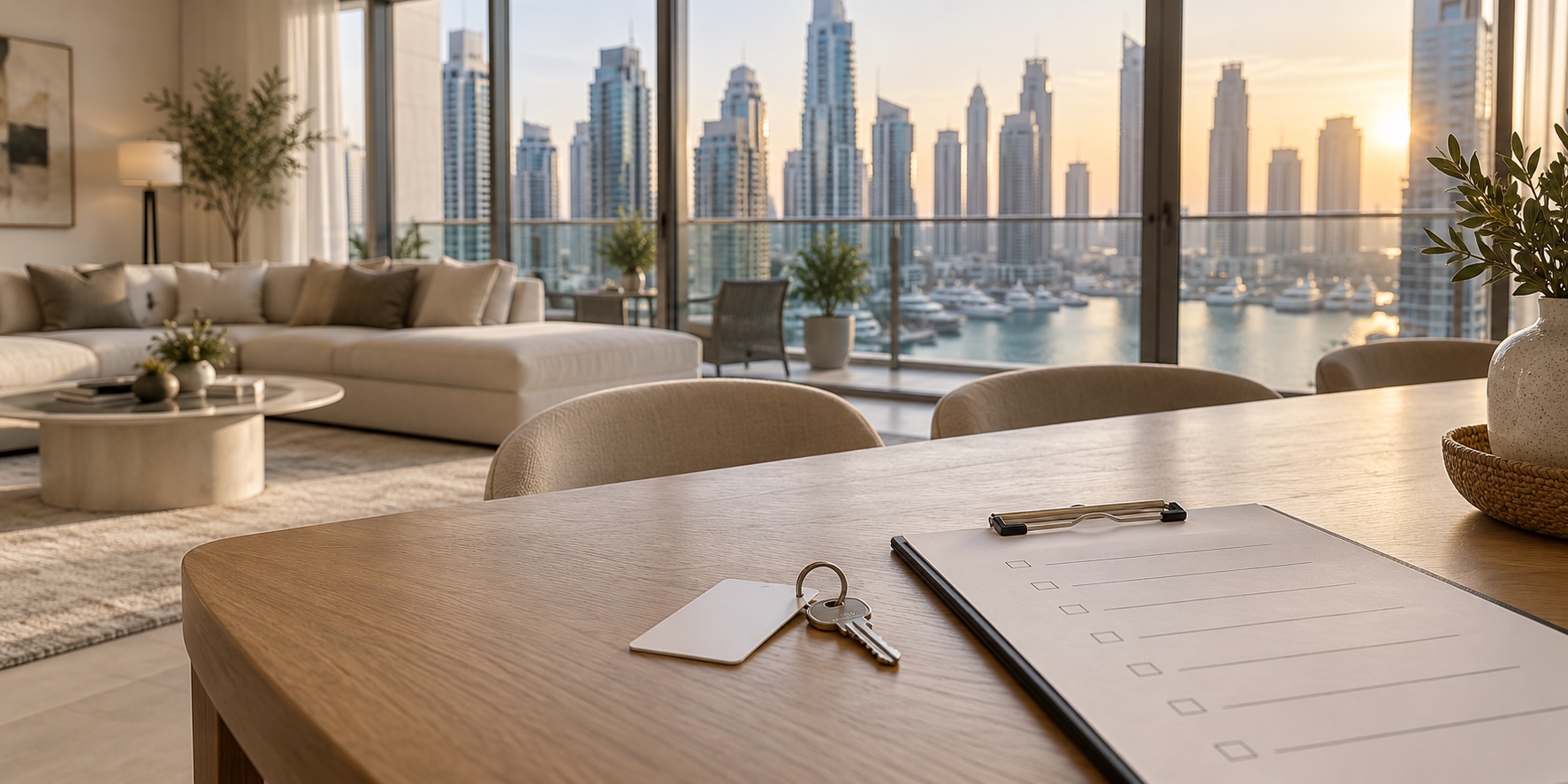
A broken chair or a marked sofa can leave a Dubai holiday-home owner with several decisions at once: what happened, what needs fixing, who should be contacted and what evidence is available. A clear incident process helps your manager answer those questions while preparing the apartment for its next guest.
When arranging Airbnb management in Dubai, agree how damage will be recorded and followed up before the first incident. This guide covers the owner’s oversight of that process, from condition records to repair approval and the final statement. It does not establish that a particular guest caused a problem or that a claim will be paid.
1. Agree who owns the incident process
Ask your manager to identify the person who inspects the apartment, the person who communicates with the guest and the person authorised to submit a platform request. Confirm who can access the relevant reservation and who takes over when that person is unavailable.
Set a written repair-approval limit and an emergency route. A technician may need to make an unsafe item secure before the owner can discuss a replacement. Agree how that decision will be documented, what spending needs approval and when the owner receives an update.
Keep a simple incident register with the reservation reference, discovery time, affected item, responsible team member and next action. Record submission deadlines separately from contractor appointments. A repair can be completed while the reimbursement request remains unresolved.
2. Preserve the condition evidence before the room changes
Ask the inspection team to record the issue before routine cleaning, furniture movement or a repair changes what can be seen, where it is safe to do so. Use a wide photograph to identify the room and item, followed by clear detail photographs. Keep the original files and the inspector’s contemporaneous notes.
Connect those records to the latest reliable pre-stay evidence. Your furnishing inventory can identify the item, while recent turnover checks help establish its condition. A photograph from the original listing launch may be useful background, but it cannot show everything that happened between stays.
Write observations precisely. “Bedroom 1 desk chair, rear left leg cracked, found during inspection at 11:20” is more useful than “guest ruined furniture.” Record who entered after checkout and any known earlier fault. Keep uncertainty visible rather than filling gaps with assumptions.
3. Separate a new incident from an existing fault
A failed appliance may involve a servicing problem, an existing defect or accidental damage. Ask the manager to check prior maintenance reports and, where needed, obtain a technician’s explanation. Discovery after a booking is a reason to investigate; it is not proof of responsibility.
Airbnb’s Host damage protection guidance excludes ordinary wear and normal checkout cleaning. It describes protection for certain guest-caused damage, subject to conditions, and states that Host damage protection is not insurance. Assess each issue against the current guidance rather than treating every replacement as a recoverable claim.
For example, a hypothetical worn seat cover and a newly broken chair leg need different evidence and decisions. Ask for an item-level assessment, not a single unexplained “damage charge.” Connect genuine maintenance issues to your repair and servicing records.
4. Put the booking channel’s deadlines on the case file
For an Airbnb reservation, the current help page says to request reimbursement through the Resolution Center within 14 days of the responsible guest’s checkout. It also says involving Airbnb Support and supplying supporting documentation must happen within 14 days of the damage or loss. Ask the case owner to check the applicable Host Damage Protection Terms and the live case instructions immediately, then record every required action and deadline.
Do not leave the request waiting for the next monthly owner statement. Ask for the submission reference, date, evidence supplied and next follow-up. Keep a deputy assigned so a weekend, absence or unanswered owner message does not leave the case unattended.
For reservations from another platform or booked directly, identify the applicable process separately. Do not assume an Airbnb workflow applies to a booking made elsewhere. Keep the channel, reservation terms and actual payment route clear in the record.

5. Support the amount with a clear repair scope
Obtain an itemised repair estimate or replacement proposal that identifies the affected item and work. Keep the purchase reference where available, the item’s age and prior condition, and the reason a repair is unsuitable if replacement is proposed. Record delivery, installation and removal costs separately.
Approve the practical property decision without assuming reimbursement. If the proposed replacement is an upgrade, separate that choice from the cost being requested for the incident. Keep estimates distinct from final invoices and explain any change in amount.
Coordinate contractor access and any necessary building arrangements for your Dubai apartment. Ask the manager to check whether the home remains suitable for the next arrival and to handle any booking impact through the appropriate process. Keep completion evidence and update the inventory once the work is accepted.
6. Check deposit arrangements before asking for payment
Airbnb’s security-deposit rules say most hosts cannot charge a deposit on or off the platform. Limited exceptions include some software-connected hosts, with disclosure requirements. Ask your manager to confirm the actual listing’s eligibility and setup before relying on a deposit or requesting one.
Keep guest communication factual and linked to the evidence. State what was found, the amount requested and the supporting documents. If the guest disputes the account, retain their response and relevant records so the case can be assessed fairly.
Ask the manager to distinguish the platform request, any permitted deposit arrangement and any separate property-insurance process. Confirm applicable policy requirements with the insurer where relevant. Do not treat a submission, a deposit hold or an estimate as money already recovered.
7. Close the case in the owner’s records
The final case note should show the repair cost, any guest payment or other recovery, amounts still outstanding and the outcome. Reconcile those entries with your owner statement. If an amount was declined or remains disputed, label it clearly.
Review what the team learned. A recurring breakage may call for a different item, clearer instructions or an improved inspection step. Update the relevant checklist without changing the original incident record. The aim is a traceable decision and a usable apartment, with the financial outcome accurately recorded.
An owner’s damage-case checklist
- A named case owner and deputy
- Reservation details and discovery timeline
- Original photographs and prior condition records
- An assessment of damage, wear or an existing defect
- Current channel requirements and recorded deadlines
- An itemised estimate and written spending approval
- Submission reference, communications and follow-up
- Repair completion, actual recoveries and statement reconciliation
To discuss holiday-home management services, contact StayinDubai with your property details and the reporting process you want in place. Ask how inspections, repair approvals and incident updates would be handled for your apartment before agreeing the management scope.
Reviewed 19 October 2026. Check current platform terms and case instructions when an incident occurs. Image: reused AI-generated illustration of keys and a property checklist in a Dubai apartment; it does not depict an actual damage incident or a specific managed property.


