

Dubai Airbnb House Rules: November 2026 Update for Owners
Prepare your Dubai Airbnb house rules for the November 2026 update: listing disclosure, checkout requests, building notices and an owner review checklist.
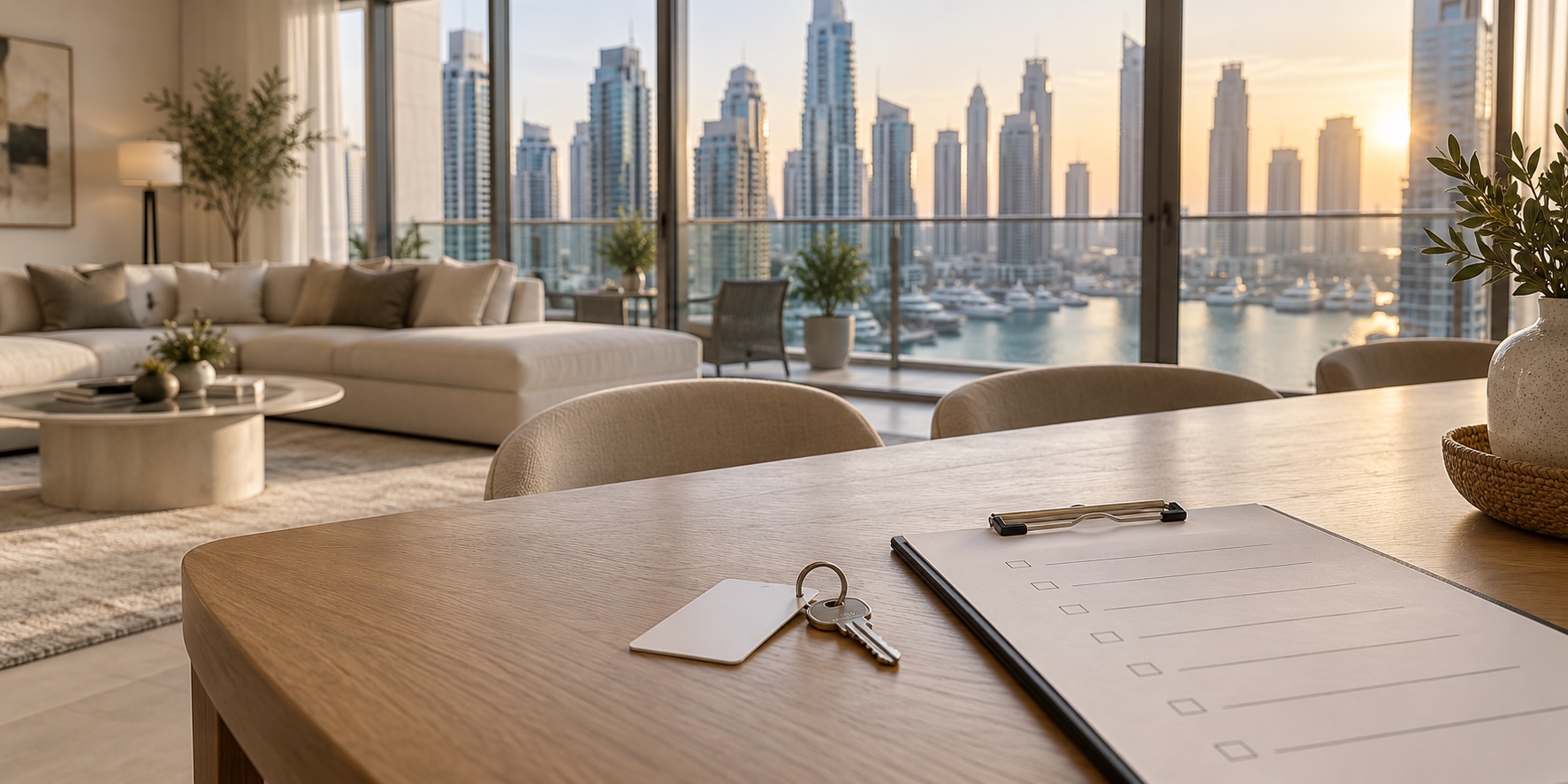
House rules for a Dubai holiday home should give guests clear expectations before they book and give the management team a consistent basis for answering questions. Problems arise when the listing says one thing, an automated message adds another condition, and a notice inside the apartment introduces a third.
Airbnb announced changes to its house-rule tools on 20 October 2026. Its new reasonable house rules and requests policy applies to reservations booked on or after 20 November 2026. This guide, checked on 25 October, explains what owners should ask their Airbnb management in Dubai provider to review before that date.
Understand the announcement and the effective date
Airbnb’s 20 October announcement brings standard rules and reasonable requests together in the Listing editor. It describes seven standard categories: overnight guest numbers, quiet hours, events, pets, smoking, commercial photography and locking up at checkout. It also brings checkout instructions into the same area.
The tools update and the new policy’s reservation cutoff are different milestones. Ask your manager to record the date of each listing edit and review reservations against the applicable terms. A November stay does not, by itself, establish that the reservation was booked after the new policy took effect.
Create a property-specific rules register
Start with a working document for the apartment, rather than copying rules from another property in the portfolio. For every proposed rule, record its source, the approved wording, where it appears and who maintains it. Keep unresolved questions visible until someone has checked them.
- Capacity and visitors: confirm the property’s permitted occupancy and any applicable visitor conditions before choosing listing settings.
- Building use: obtain current guidance on parking, shared facilities, access cards and common areas from building management.
- Owner preferences: identify requests that need review against platform policies before they reach guests.
- Operational details: check that key return and other instructions describe what guests can actually do at this apartment.
Airbnb’s Dubai hosting guidance highlights building rules, parking and neighbour considerations. Use the DET holiday-home regulation guide and current property documents to resolve local requirements. Do not assume every tower has the same conditions or treat an owner preference as a government rule.
Put each expectation in the appropriate listing section
Airbnb’s house-rule editing guidance distinguishes standard rules from additional requests. It also explains that changes apply to future reservations received after the edit; pending and confirmed reservations retain the rules in place when the reservation was received.
For the forthcoming policy, rules and requests must be disclosed in the designated listing section at booking. A later message or apartment sign cannot introduce a new condition. Ask your manager to review old message templates alongside the public listing, and retain a dated copy of the approved version.
As an owner review exercise, compare the live listing with the scheduled pre-arrival message and the apartment folder. Highlight every sentence that tells a guest they must do something. The team should be able to explain where that expectation was disclosed and whether the wording matches.

Review checkout tasks with housekeeping
The October announcement gives examples of requests Airbnb generally considers unreasonable under the new policy, including stripping beds, washing and putting away dishes, and taking rubbish off-site. It contrasts these with simpler requests such as gathering used towels or putting dishes in the sink. Local context can affect Airbnb’s assessment.
Have the housekeeping lead review the actual departure message. If a task moves from the guest’s instructions to the cleaner’s work, update the cleaning brief and allow for it when scheduling the turnover. Otherwise, removing a line from the message can leave the operational task without an owner.
For example, if the old message asks guests to remove bed linen, agree who will do that after the message changes. Check the new brief with the supervisor and test the next turnover against it. The separate Dubai Airbnb cleaning checklist covers the wider readiness inspection.
Separate genuine local notices from host penalties
The new policy generally prohibits hosts from imposing fines or penalties. Airbnb provides a separate way to disclose local rules that may lead to fines imposed by a community association or government. Its local-rules guidance asks hosts to explain the rule, who sets it, the amount or calculation, and how it may be charged.
Ask your manager to trace any existing penalty wording to its source before keeping it. A round-number charge in an old template is not evidence of a building fine. Record unresolved items for review, and keep any actual damage case in the separate guest-damage evidence process.
Agree how the team handles questions and complaints
Airbnb’s Community Disturbance Policy prohibits disruptive gatherings and open-invite parties. An events setting does not remove that policy. Owners should ask who receives a neighbour’s complaint, who contacts the guest, and who handles platform support if an issue escalates.
Use a simple incident record: time reported, what was observed, relevant reservation details, action taken and the next person responsible. Keep factual observations separate from assumptions. A late-night handover should leave the next shift able to continue the case without making the guest or neighbour repeat everything.
Request a completed review before 20 November
A useful owner sign-off pack contains the revised listing, approved message templates, the current apartment folder, outstanding building questions and the name of the person responsible for each correction. Include a reservation check so the team understands which wording applies to existing bookings.
Finish by checking one guest journey from the public listing through checkout. Confirm that each instruction is understandable, consistent and practical for this property. When discussing Airbnb management in Dubai, ask for this evidence of the operating process alongside the service proposal. You can contact StayinDubai to discuss your property’s management needs.


